Part of our Provider Spotlight series: short interviews with prescribers who support slow, patient-led benzodiazepine tapers. Answers are the provider's own, lightly edited for formatting, and approved by the provider before publication.
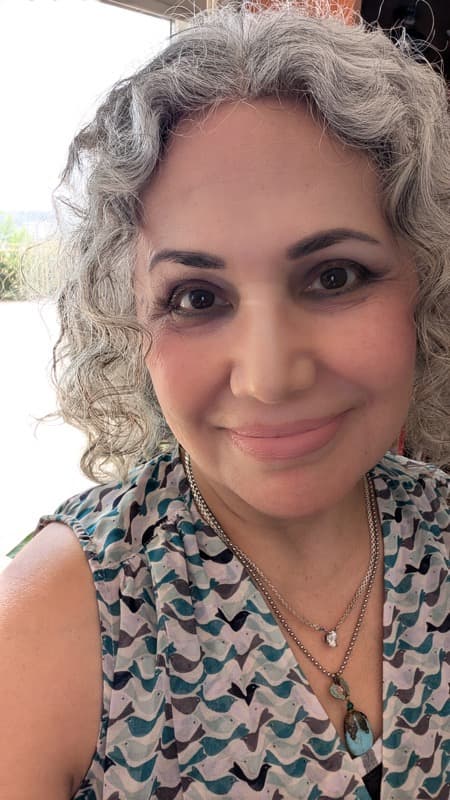
Shala Shardil is a board-certified mental health nurse practitioner and the founder of Sholly Wellness in Orange County, California. Her practice offers a named Gentle Tapering service that pairs dose reductions with psychotherapy and nutrition and lifestyle support, delivered by telehealth throughout California. She accepts various commercial health plans, state-funded coverage, and Medicare.
How do most patients find your practice, and where in their taper are they when they arrive?
"Most patients reach us through directory platforms like Headway, Alma, and Grow Therapy, insurance provider lists, or trusted advocacy organizations like the Benzodiazepine Information Coalition (BIC).
"Most people arrive at our door at the very beginning of their journey—frequently in a state of crisis and emotional distress. More often than not, they come to us after feeling blindsided, dismissed, or actively threatened by providers who don't understand the realities of physiological dependence. They have often been told they must stop abruptly, forced into a dangerously rapid detox, or left feeling like a 'difficult patient' simply for asking for help. They arrive feeling frightened, exhausted, and betrayed by the very healthcare system they trusted. Our first priority is to replace that panic with safety: you are not being cut off, you are not alone, and you will not be rushed."
What does a taper look like in your practice, say for someone on 1 mg of clonazepam?
"There is no one-size-fits-all formula, because your central nervous system is entirely unique. For someone taking 1 mg of clonazepam (Klonopin), a taper is never a race; it is a personalized, patient-led journey.
"Depending on your history, symptoms, and physiological tolerance, we might:
- Transition you using a gradual diazepam cross-over modeled after the Ashton Manual.
- Use a conservative 'cut-and-hold' strategy with low-dose tablets (such as gently reducing by 0.125 mg per interval and holding until your body stabilizes).
- Utilize custom compounded liquid formulations, allowing micro-reductions of 5% to 10% per month (or even smaller) so adjustments are virtually seamless.
"Above all, you set the pace. We adjust the taper to your symptoms—we never force your symptoms to match a rigid calendar."
Your Gentle Tapering service pairs dose reductions with psychotherapy and nutrition support. How do you set the pace, and what happens when symptoms flare mid-taper?
"The pace is dictated entirely by your body's feedback, not an arbitrary schedule. We move forward only when you feel stable.
"When a flare-up or 'wave' occurs—which is a normal, non-linear part of nervous system healing—our rule is: we pause, we breathe, and we do not panic. We never force a dose reduction during a destabilizing wave; instead, we hold the dose steady until your nervous system resets.
"Simultaneously, we wrap you in practical, somatic, and emotional support. Through psychotherapy, we work on nervous system regulation and self-compassion. Through targeted nutrition and sleep support, we give your brain the biological building blocks it needs to repair. When symptoms make regular daily functioning unsustainable, we step in to help you step back—including completing documentation for State Disability Insurance (SDI) or medical leave, ensuring you have the legal and financial breathing room to rest and heal without the pressure of work."
How do you handle doses smaller than the smallest tablet (liquids, compounding)?
"The end of a taper is often the most delicate phase, and trying to split tiny, chalky pills with a razor blade is inaccurate and anxiety-provoking. We solve this by partnering closely with specialized, reputable compounding pharmacies that prepare precision oral liquid suspensions.
"Switching from a pill to a liquid can occasionally bring subtle differences in absorption, so we manage this transition with extreme care. We often prescribe both formulations simultaneously, allowing you to transition gradually at your own pace until your body adapts. You will never have to guess whether you took the right micro-dose."
Think Sholly Wellness could be a fit for your taper?
Reach out through their site. Vetting questions to bring are in our doctor guide.
Visit Sholly WellnessWho is a good fit for the practice, and who isn't?
"Location and format: we currently serve patients throughout California via secure, convenient telehealth.
"Insurance and cost: we accept various commercial health plans, state-funded coverage, and Medicare. For individuals paying out of pocket, comprehensive individual sessions are $225.
"Who is a good fit: individuals who want a collaborative, respectful partnership; who understand that nervous system healing takes time, patience, and holistic lifestyle support; and who want a gentle, medically supervised taper.
"Who is not a good fit: anyone seeking a rapid 30-day 'quick detox,' or patients outside the state of California."
What's your view on protracted withdrawal, and how do you support patients through it?
"Protracted withdrawal is real, it is physiological, and it is profoundly isolating. Feeling sick months after a medication is gone makes many people fear they are permanently broken. You are not permanently broken. Protracted withdrawal is neuroplastic recovery in progress—it is the central nervous system slowly recalibrating its GABA and glutamate receptors.
"Our approach centers on validation, radical acceptance, and sustained nervous system nourishment. We do not pathologize your timeline. Instead, we anchor your recovery in essential biological pillars: nutrient-dense foods, circadian alignment and morning sunlight, gentle movement, restorative sleep hygiene, and time in nature. Healing requires consistency, gentleness, time, and repeating those basics day after day until the baseline shifts."
What would you tell someone whose current prescriber wants them off in four weeks?
"First: take a deep breath. You are not trapped, even if it feels terrifying right now.
"A four-week taper from long-term benzodiazepine use is outdated, clinically unsafe, and contrary to modern guidelines like the FDA's updated black box warnings. Here is what we recommend:
- Advocate with evidence: bring updated guidelines (such as the FDA drug safety communication or resources from the Benzodiazepine Information Coalition) to your provider. Approach them calmly: 'I want to safely taper off, but I need a slower, symptom-based schedule to protect my nervous system and maintain my daily functioning.'
- Protect yourself if they refuse: if your provider remains rigid or dismissive, remember you have the right to seek a second opinion. Do not waste energy fighting an adversarial relationship—direct your energy toward finding a provider who understands slow discontinuation.
- Lean into peer support: connect with educated support networks and patient communities. You are not the first person to face an uncooperative prescriber, and you don't have to navigate the transition in the dark."
Anything you wish every patient knew before starting a taper?
"I wish every patient knew that your body has an innate, extraordinary capacity to heal.
"When you are deep in the throes of withdrawal symptoms, your mind will try to convince you that this pain is permanent. It isn't. The journey is not linear—there will be setbacks and breakthroughs—but the brain does recover when given the right conditions. Real, lasting wellness is built from the ground up: through whole-body nutrition, sunlight, restorative sleep, gentle movement, and genuine human connection. If you can meet your body with patience and acceptance instead of fear, you can and will reclaim your life."
Shala Shardil also appears in the prescribers we have vetted section of our doctor-finding guide. If you're preparing for a first appointment with any prescriber, bring a written schedule from the taper calculator and the five vetting questions from the doctor guide.
At a glance
Shala Shardil, PMHNP-BC · Sholly Wellness
- Format
- Telehealth throughout California; adolescents, teens, and adults
- Cost
- Accepts various commercial plans, state-funded coverage, and Medicare; self-pay sessions $225
- Focus
- Gentle Tapering: diazepam cross-overs or direct cut-and-hold tapers with compounded micro-reductions, paced by symptoms, with psychotherapy and nutrition support alongside
- Website
- shollywellness.com
Disclosure: Provider Spotlights are free. TaperOffBenzos never accepts referral fees or per-patient payments from any provider. This spotlight is education, not a referral or an endorsement of outcomes. Answers are the provider's own, lightly edited for formatting, and approved by the provider before publication. Are you a prescriber who supports slow, patient-led tapers? Introduce yourself.
Planning your taper?
Build a free week-by-week reduction schedule with dates, diazepam equivalents, and a printable chart for your prescriber.
About this content
This article is curated by the TaperOffBenzos editorial team and fact-checked against theAshton Manual protocols. It is for educational purposes only and does not constitute medical advice. Read oureditorial policy.
Need a prescriber who will support a slow taper? See ourdirectory of benzo taper doctors.
